
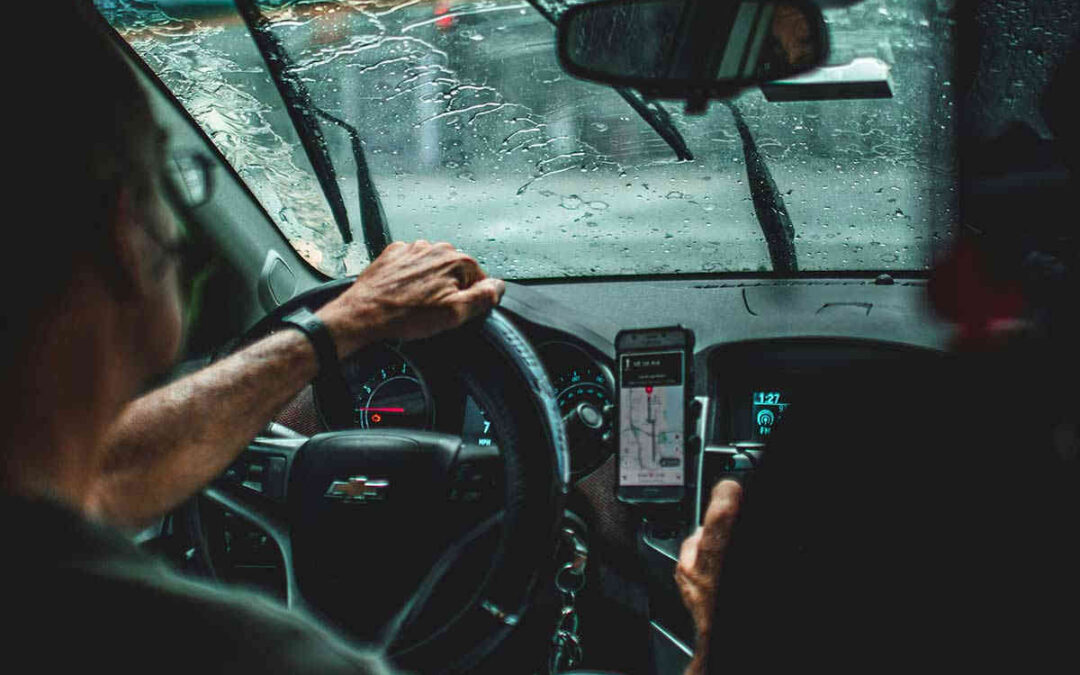
Uber says safety is its top priority. But recent in-app warnings sent to drivers about “distracted driving” reveal something much larger happening behind the scenes: algorithmic monitoring, behavioral tracking, and growing concerns about privacy, fairness, and worker treatment in the gig economy.
Drivers across the country are receiving notices from Uber stating:
“Information from your recent trips indicates that you may have been frequently exiting and opening the app on your phone while driving.”
That single sentence raises an important question:
How much is Uber monitoring drivers — and where is the line between safety and surveillance?
⸻
Uber Is Monitoring Driver Behavior Through the App
The warning makes clear that Uber is not relying only on passenger complaints anymore. The company appears to be analyzing:
• app activity,
• phone interaction patterns,
• navigation behavior,
• and possibly background telemetry collected during trips.
Uber’s own training materials state that distracted driving can include:
• taking your eyes off the road,
• taking your hands off the wheel,
• mental distraction,
• and even environmental sound distractions.
Drivers are then warned that repeated reports or detected behavior may result in:
• lower ratings,
• dangerous driving reports,
• or loss of access to the Uber platform.
In other words, the app is not just dispatching rides. It is actively evaluating driver behavior.
⸻
Drivers Say They Are Being Flagged Even While Using Phone Mounts
Many drivers report receiving distracted-driving warnings even when:
• their phones are mounted properly,
• they are using hands-free navigation,
• and they are following Uber’s own safety recommendations.
Uber itself encourages drivers to purchase phone mounts and states that mounted devices can help reduce distraction. Yet drivers say they are still being flagged or threatened with deactivation despite complying with those recommendations.
Some drivers believe Uber’s detection systems may be:
• overly sensitive,
• inaccurate,
• or based on algorithmic assumptions rather than actual unsafe driving.
Others worry that normal app interaction required to perform the job — such as:
• accepting rides,
• checking navigation,
• responding to rider messages,
• or adjusting trip settings —
may trigger automated safety systems.
For drivers whose income depends entirely on access to the app, receiving repeated warnings can create fear and uncertainty, especially when the exact criteria being used are unclear.
⸻
The Contradiction at the Center of Uber’s System
Here’s the contradiction many drivers are frustrated by:
Uber requires drivers to use a smartphone constantly in order to work.
Drivers must use the app to:
• accept rides,
• follow navigation,
• communicate with riders,
• manage trips,
• view earnings,
• and receive instructions.
Yet Uber also warns drivers that interacting with the same required device may be considered dangerous driving.
One training slide even acknowledges:
“Riders recognize that drivers use their cellphones to access the Uber app.”
This creates a system where the phone is both:
• an essential work tool,
• and a source of potential discipline or deactivation.
⸻
Is Uber Encouraging Drivers to Buy Equipment to Solve a Problem Uber Created?
After warning drivers about distracted driving, Uber directs some drivers to discounted phone mounts.
The company promotes mounts with messages such as:
• “Limit one mount per driver”
• “Only available to those who received the offer”
That raises another issue:
if safe operation requires mounted devices, then smartphones and mounting equipment are arguably essential tools of the job.
Many drivers ask:
• Why should workers bear these costs?
• Why does Uber not provide standardized equipment?
• Why are drivers penalized for interacting with technology Uber itself requires?
⸻
Privacy Concerns Are Growing
Some drivers believe Uber’s monitoring goes too far.
The company appears capable of tracking:
• app opening and closing,
• foreground/background activity,
• GPS movement,
• acceleration and braking,
• route behavior,
• and potentially other behavioral signals.
Uber would likely argue that drivers consent to this monitoring through:
• app permissions,
• Terms of Service,
• and privacy agreements.
But critics argue that:
• many workers do not fully understand the extent of the surveillance,
• consent buried inside lengthy agreements is not meaningful transparency,
• and algorithmic monitoring can become excessive.
This debate is becoming increasingly important as gig platforms expand automated management systems.
⸻
Are There Possible Legal Issues?
Privacy law in the United States is still catching up to app-based labor systems.
In California, laws such as the CCPA and CPRA provide users with certain rights involving:
• access to collected data,
• disclosure requirements,
• and information about data practices.
Questions drivers and advocates may ask include:
• What exactly is Uber collecting?
• Is monitoring occurring off-duty?
• How long is data retained?
• Are drivers being disciplined by automated systems without meaningful appeal rights?
These issues are part of a larger national conversation about:
• worker surveillance,
• algorithmic management,
• and digital labor rights.
⸻
The Bigger Issue: Algorithmic Management
The real issue may not simply be “phone distraction.”
It may be the rise of algorithmic control in gig work.
Drivers can now face consequences based on:
• behavioral predictions,
• app-generated flags,
• rider reports,
• and automated safety systems.
Many drivers report feeling:
• constantly monitored,
• easily replaceable,
• and vulnerable to deactivation without due process.
Some drivers say they were permanently deactivated after repeated distracted-driving allegations despite:
• using approved mounts,
• maintaining high ratings,
• and never receiving traffic citations related to distracted driving.
As rideshare companies continue expanding AI-driven enforcement systems, workers and lawmakers alike are beginning to ask:
Who watches the algorithm?
⸻
Safety Matters — But So Do Worker Rights
Nobody disputes that distracted driving is dangerous.
Drivers, riders, pedestrians, and everyone on the road deserve safety.
But safety cannot become an excuse for:
• opaque surveillance,
• one-sided enforcement,
• or systems that punish workers for conditions built into the platform itself.
If Uber truly wants safer roads, transparency and fairness must be part of the conversation too.
Because drivers are not just app users.
They are workers whose livelihoods depend on systems they often cannot see, challenge, or fully understand.
