Starting January 1, 2026, California Assembly Bill 1340 (AB 1340) is expected to create a new legal framework allowing rideshare drivers working for companies like Uber and Lyft to organize and collectively bargain while still remaining independent contractors. Supporters are calling it historic. Critics say the road ahead will still be extremely difficult. The Background: Why Drivers Couldn’t Unionize Before For years, one of the biggest obstacles facing Uber and Lyft drivers has been their legal classification. Under California’s Proposition 22, app-based drivers are classified as independent contractors instead of employees. That distinction matters because traditional labor laws in the United States were designed for employees, not contractors. Employees normally have protections under the National Labor Relations Act (NLRA), including: The right to form unions Collective bargaining rights Legal protections requiring employers to negotiate Independent contractors generally do not have those protections. Because of that, Uber and Lyft have consistently argued that they are not legally required to negotiate with driver unions. What AB 1340 Changes AB 1340 attempts to create a new framework specifically for app-based drivers. Instead of forcing Uber and Lyft drivers to become employees, the law would allow them to: Remain independent contractors Organize collectively Elect driver representatives Participate in negotiations with app-based companies This creates a middle ground between traditional employment and completely independent contractor status. What Drivers Could Potentially Negotiate Possible negotiation topics may include: Fare transparency Deactivation protections Safety standards Airport working conditions Earnings protections Many drivers hope these negotiations could improve daily working conditions and increase accountability from rideshare companies. The Biggest Legal Challenge: Federal Antitrust Law One of the largest concerns surrounding AB 1340 involves federal antitrust laws. Independent contractors are often treated as separate businesses under federal law. When independent businesses negotiate compensation collectively, companies may argue that this violates antitrust rules or constitutes “price fixing.” Because of this, AB 1340 could face: Federal lawsuits Appeals Court delays Legal challenges from industry groups This means the law’s long-term future may ultimately be decided in court. Will Uber and Lyft Cooperate? Uber and Lyft have historically fought aggressively to protect their business model. Their companies rely heavily on: Labor flexibility Dynamic pricing Avoiding traditional employment costs Because of this, many experts believe the companies will continue challenging efforts that significantly increase driver protections or operational costs. Collective Bargaining Does Not Guarantee Fast Results Even traditional labor unions often spend years negotiating first contracts. Gig workers may fase additional complications because: The legal framework is new Drivers remain independent contractors Federal legal questions remain unresolved Drivers should not expect immediate raises or overnight changes. Why AB 1340 Is Still Historically Important Despite the uncertainty, AB 1340 represents a major shift in labor policy. For the first time, California is attempting to formally recognize that app-based workers deserve some form of collective bargaining rights while still remaining independent contractors. Before AB 1340: Uber and Lyft could simply argue they had no obligation to negotiate. After AB 1340: California is attempting to create a legal structure requiring some level of bargaining and driver representation. Final Thoughts AB 1340 could become one of the most important labor experiments in modern American history. It may create meaningful improvements for rideshare drivers, or it may become tied up in years of litigation and political battles. The final outcome will depend on: Court rulings Political enforcement Driver participation Company resistance What is clear is that the debate over gig worker rights in
California is far from over.
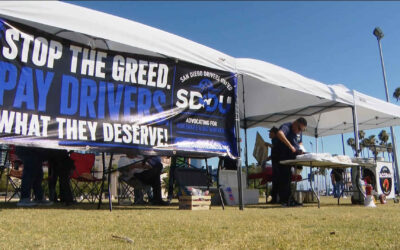
San Diego rideshare drivers rally for higher pay, airport fare minimums
Local rideshare drivers are calling for an additional $1.40 per mile and 45 cents per minute for rides, along with a $15 minimum fare for airport trips. Author: Richard AllynPublished: 9:22 PM PDT June 17, 2026Updated: 9:22 PM PDT June 17, 2026 SAN DIEGO — San Diego...